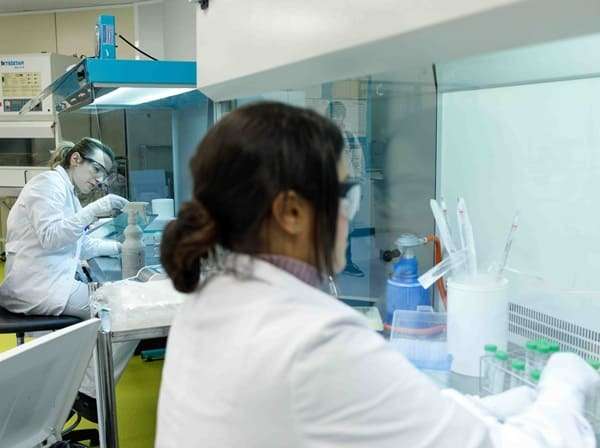
A laminar flow cabinet is used to create a microorganism-free environment and in laboratory procedures that demand a high degree of sterility
A laminar flow cabinet, also known as a laminar flow chamber or laminar flow hood, is an essential piece of equipment in many analytical and specialty laboratories. This device is characterized by creating a contaminant-free work environment, providing a constant flow of filtered air through HEPA (High-Efficiency Particulate Air) filters. Below we detail what it is, what it is used for, how it is used, its relationship to HEPA filters, when it is used, and its application in different types of laboratories.
What is a laminar flow cabinet?
A laminar flow cabinet is a piece of equipment designed to protect samples, products and processes from particulate and microbial contamination. It works by creating a unidirectional airflow, usually horizontal or vertical, that passes through HEPA filters before entering the work area. This clean air flow prevents particles and microorganisms from the outside environment from contaminating the work area.
What are these cabinets used for?
Laminar flow cabinets are primarily used in laboratories that require a contaminant-free environment to protect the integrity of sensitive samples and processes. They are crucial in applications involving the manipulation of cell cultures, preparation of sterile solutions, and work with pharmaceuticals and medical devices. Additionally, they are used in the electronics and semiconductor industries to prevent contamination of critical components.
How and when are they used?
Using a laminar flow cabinet requires following strict protocols to maintain the sterility and efficiency of the equipment:
- Preparation: Before using the booth, it is necessary to turn it on and let it run to ensure that the air in the work area is completely clean.
- Sample handling: Samples and materials must be introduced into the cabinet carefully, avoiding any sudden movement that may generate turbulence and compromise laminar flow.
- Cleaning: After each use, the work surface must be cleaned with appropriate disinfectant solutions to maintain sterility.
Laminar flow cabinets are used in any situation that requires an environment free of particles and microorganisms. They are essential in laboratory procedures that require a high degree of sterility, such as the preparation of culture media, the handling of biological samples and the production of sterile pharmaceutical products.
HEPA filters
HEPA filters are critical components in laminar flow cabinets. These filters are capable of removing at least 99.97% of particles with a diameter of 0.3 microns or larger. The air passing through these filters is purified, ensuring that the airflow in the cabin is free of contaminants. HEPA filters must be replaced periodically to ensure their effectiveness.
Use in specialized laboratories
In testing laboratories, laminar flow cabinets are essential to avoid sample contamination during preparation and analysis. These cabinets ensure that analysis results are not compromised by environmental contaminants, allowing accurate and reliable data to be obtained.
Laboratories specializing in quality control of medical devices and pharmaceuticals rely heavily on laminar flow cabinets. These laboratories must comply with strict sterility standards to ensure that products do not pose risks to the health of users. They provide the controlled environment necessary to carry out tests and trials without risk of contamination.
Laminar flow cabinets are essential tools in many laboratories due to their ability to create a contaminant-free work environment. Proper use and maintenance of HEPA filters ensures air purity, thus protecting the integrity of the samples. Its use is vital in the research and production of safe and effective products, especially in the fields of biology, the pharmaceutical industry and medical technology.